
AIDA™ and the Rise of the Autonomous Datacenter

CONTENTS
Sources
Uptime Institute – Global Data Center Survey (2023)
Gartner – Infrastructure Operations Forecast (2024)
McKinsey & Company – The Future of AI-Enabled Operations (2023)
Deloitte Insights – Predictive Maintenance and the Smart Factory (2022)
IBM Security – Cost of a Data Breach Report (2024)
Nature Energy – AI Datacenter Cooling Optimization Research
CIOReview Magazine – Team 7 Consulting Feature (November 2025)
EINPresswire – Team 7 Consulting Announces AIDA™ (March 2026)
How AI-Driven Infrastructure Is Redefining Enterprise Reliability, Security, and Operational ROI
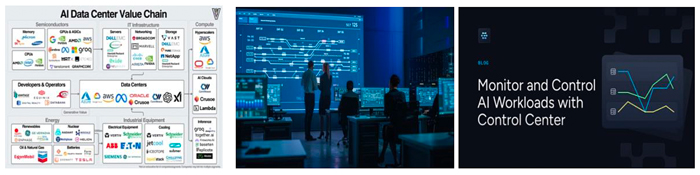
Introducing AIDA™: A New Model for Datacenter Operations
Modern enterprises depend on datacenters as the operational backbone of global commerce. Financial systems, airline logistics, aerospace engineering, defense operations, and consumer supply chains all rely on infrastructure environments that must operate continuously with near-perfect reliability.
Recognizing the growing complexity of these environments, Team 7 Consulting recently introduced AIDA™ (AI Datacenter Administration) — an autonomous AI platform designed to monitor, secure, and optimize enterprise datacenter ecosystems.
AIDA™ represents a shift away from traditional monitoring tools toward AI-driven operational intelligence capable of predicting issues, optimizing infrastructure performance, and strengthening operational resilience.
The launch of AIDA™ and its role in modern enterprise infrastructure have been highlighted in multiple industry publications, including CIOReview Magazine (November 2025) and a recent EINPresswire announcement (March 2026). Additional information about the platform and Team 7’s infrastructure capabilities is available on the company’s website.
These early deployments are helping validate what many industry analysts are now emphasizing: the future of datacenter operations will be autonomous, predictive, and AI-driven.
Why the Industry Is Moving Toward Autonomous Datacenters
Traditional datacenter operations rely heavily on human monitoring and reactive incident response. As infrastructure environments expand across hybrid cloud, private datacenters, and distributed systems, this model becomes increasingly difficult to sustain. Industry research highlights the scale of the challenge.
According to the Uptime Institute Global Data Center Survey (2023), unplanned datacenter outages now cost organizations an average of $9,000 per minute, while major incidents can exceed $1 million per event depending on operational impact.
These risks are particularly significant for industries such as
- global commercial banking
- airlines and aviation operations
- aerospace and defense
- consumer packaged goods (CPG) supply chains
In these environments, even brief disruptions can ripple across global systems and supply chains. AI-enabled operational platforms are emerging as one of the most effective solutions to reduce these risks.
From Monitoring Tools to AI-Driven Operational Intelligence
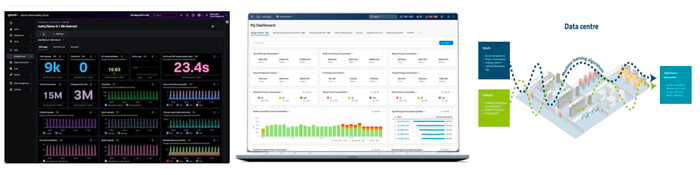
AIDA™ and similar AI-driven operational platforms transform datacenter management by shifting from reactive monitoring to predictive optimization.
Rather than waiting for failures or alerts, these systems continuously analyze telemetry across infrastructure layers, identifying patterns and anomalies before they develop into operational issues.
According to Gartner’s Infrastructure Operations Forecast (2024), more than 50% of enterprise infrastructure operations will incorporate AI-driven automation by 2027, significantly reducing manual intervention while improving reliability.
AI-enabled platforms can continuously evaluate conditions such as:
- hardware performance degradation
- cooling imbalances and energy inefficiencies
- network anomalies
- cybersecurity threats
- application resource utilization
By integrating real-time analytics with automated decision frameworks, autonomous platforms help infrastructure teams prevent incidents rather than simply respond to them.
Optimizing Infrastructure ROI Through AI
Datacenters represent one of the largest operational expenditures for enterprise organizations. Infrastructure costs extend beyond hardware to include:
- power consumption
- cooling and environmental management
- facility operations
- maintenance and support personnel
AI-driven infrastructure optimization is proving capable of significantly improving these economics.
Research from McKinsey & Company (2023) indicates that advanced AI optimization can reduce infrastructure operational costs by 15–25%, particularly through energy management and predictive maintenance.
One of the most impactful improvements comes from predictive maintenance.
A study from Deloitte Insights (2022) found predictive maintenance strategies can reduce maintenance costs by 10–40% while decreasing downtime by up to 50%.
Platforms such as AIDA™ apply these principles by continuously analyzing equipment behavior and operational telemetry, enabling infrastructure teams to address potential issues before they disrupt business operations.
Improving Energy Efficiency and Environmental Stability
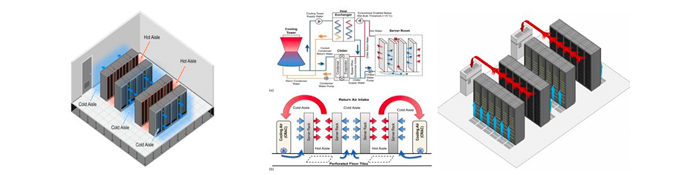
Cooling systems account for a significant portion of datacenter operating costs.
AI-driven optimization platforms can dynamically adjust cooling and airflow distribution across datacenter facilities, improving both operational efficiency and sustainability.
Research published in Nature Energy demonstrated that AI-based cooling optimization implemented within hyperscale datacenters reduced energy consumption related to cooling by up to 40%.
Beyond energy savings, intelligent environmental management can improve hardware longevity and operational reliability.
Balanced thermal conditions across racks and server clusters reduce component stress and allow infrastructure environments to operate closer to optimal performance thresholds.
Security, Governance, and Trust in Autonomous Environments
Cooling systems account for a significant portion of datacenter operating costs.
An often-overlooked benefit of autonomous infrastructure environments is improved security posture.
Traditional operations require frequent manual intervention from infrastructure personnel, increasing the number of individuals interacting with critical systems.
AI-driven operational platforms reduce unnecessary access while maintaining continuous monitoring across systems.
According to the IBM Security Cost of a Data Breach Report (2024), compromised credentials and human error remain among the most common causes of enterprise security incidents.
By minimizing operational friction and automating routine tasks, autonomous datacenter platforms can reduce exposure while strengthening governance frameworks.
For industries operating under strict regulatory and operational standards—such as financial services, aviation, and defense—these improvements directly support regulatory compliance and client trust.
Early Lessons from AIDA Deployments
Team 7 Consulting has begun implementing AIDA™ in pilot and production environments across several enterprise sectors.
These deployments demonstrate how AI-driven infrastructure platforms can enhance operational performance across complex environments that support mission-critical systems.
Key benefits observed in early implementations include:
- proactive infrastructure monitoring and incident prevention
- improved cooling and environmental balance across facilities
- enhanced cybersecurity monitoring and anomaly detection
- optimized infrastructure utilization and SaaS platform performance
- improved operational reporting for executive and compliance teams
These outcomes reinforce the growing industry consensus that AI-enabled operational intelligence will become foundational to modern datacenter infrastructure.
The Future: Self-Optimizing Infrastructure
The next generation of enterprise datacenters will not simply host systems.
They will function as self-optimizing operational environments capable of continuously monitoring, analyzing, and adapting to changing conditions.
Artificial intelligence will serve as the operational intelligence layer enabling these systems to:
- prevent infrastructure disruptions
- optimize resource utilization
- enhance security and governance
- improve environmental sustainability
- strengthen enterprise resilience
Organizations that embrace this transition early will gain significant advantages in reliability, efficiency, and operational trust. For global enterprises operating mission-critical infrastructure, the autonomous datacenter is quickly becoming not just an innovation—but a necessity.
Sources
Uptime Institute – Global Data Center Survey (2023)
Gartner – Infrastructure Operations Forecast (2024)
McKinsey & Company – The Future of AI-Enabled Operations (2023)
Deloitte Insights – Predictive Maintenance and the Smart Factory (2022)
IBM Security – Cost of a Data Breach Report (2024)
Nature Energy – AI Datacenter Cooling Optimization Research
CIOReview Magazine – Team 7 Consulting Feature (November 2025)
EINPresswire – Team 7 Consulting Announces AIDA™ (March 2026)

3245 Northpoint Parkway, Suite 203, Alpharetta, Georgia 30005, United States
Phone:
1 (252) 776-0937
Team7 Consulting, LLC
3245 Northpoint Parkway, Suite 203, Alpharetta, Georgia 30005, United States